

What Is Commodity Classification and Why Do You Need It?

If you’ve recently leased a space, applied for a permit, or made changes to your operations, you may have been told that you need a commodity classification letter, occupancy classification letter, a high-piled storage letter, or a hazardous material evaluation.
For many people, that request comes out of nowhere. The space hasn’t changed. The building looks the same. So why is this suddenly required? Let’s break it down.
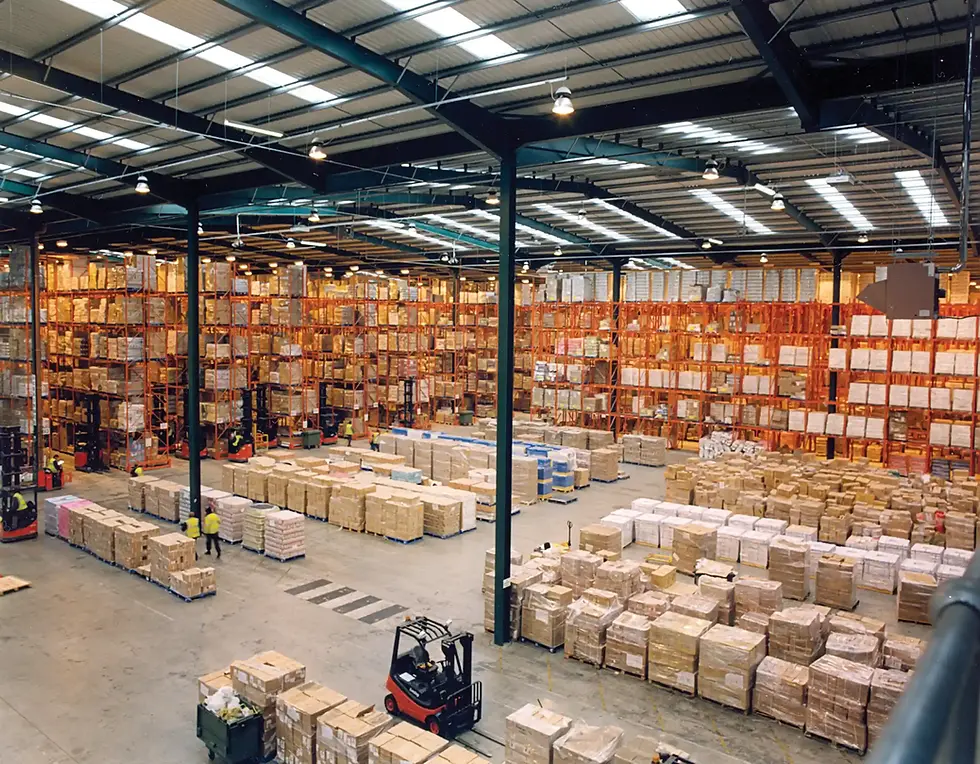
Commodity Classification is the process of identifying what is stored, used, or produced in a building so the Authority Having Jurisdiction (AHJ) can evaluate code compliance.
The term Occupancy Classification Letter, or OCL, is commonly used in San Antonio. In other places or
project settings, similar evaluations may be called commodity storage letters, commodity letters, high-piled storage letters, hazardous materials evaluations, or other similar names. The name may vary, but the purpose is generally the same: to help document how a building or tenant space is being used so the Authority Having Jurisdiction (AHJ) can evaluate code compliance. In this article, we will refer to it broadly as commodity classification.
What is a commodity classification?
Commodity classification is the process of identifying and documenting how a building or tenant space is actually being used.
It identifies things like:
What materials are stored or used
How those materials are stored
Whether there are manufacturing processes involved
Whether hazardous materials are present
This information helps the Authority Having Jurisdiction (AHJ) determine whether the building’s fire protection systems and other life safety features are appropriate for that specific use. In simple terms, a commodity classification answers the question: “Is this building set up safely for what’s happening inside it?”
Why are you being asked for one?
Most of the time, a commodity classification letter or similar evaluation is required when something changes, even if it doesn’t feel like a big change.
A few common triggers:
A new tenant moves into a space
Storage type or arrangement changes
Materials change
A permit or Certificate of Occupancy is requested

A tenant change does not always mean the building's formal occupancy classification has changed; in many cases, especially with warehouses and factory/industrial buildings, the occupancy group may remain the same. What often changes is the manner of use.
The new tenant may store different commodities, use different materials, change the storage arrangement, or introduce a new manufacturing process. That matters because fire risk is tied to what’s inside the building, not just the building itself.
A simple example
Let’s say a warehouse was previously storing metal parts. Now, a new tenant has moved in and is storing plastic products. Same building. Same layout. No construction. But from a fire protection standpoint, those are two very different hazards. Plastic burns faster and hotter. That means the sprinkler system may need to perform very differently to control a fire. Because of that, codes require the system to be evaluated, and that’s where the commodity classification comes in.
What happens during a commodity classification evaluation?
That depends on the building and the amount of available information. In some cases, it’s relatively straightforward. The proposed operations, commodities, methods, and storage heights are evaluated. The IBC and IFC code requirements, and the minimum fire protection system characteristics for that use, are established and documented. Then, if the existing sprinkler system design is known, it can be compared directly to what’s required for the proposed operations.
In other cases, especially with older buildings, the information just isn’t there. When that happens, the process can involve a deeper look, including:
Fire flow testing to confirm the available water supply
Underground utility location services to establish the size and location of underground utilities
Field surveys of the existing sprinkler system
Recreating the system layout digitally
Running hydraulic calculations and modeling to understand system capabilities
The goal is to make sure decisions are based on real data, not assumptions.

What about new or vacant spaces?
Sometimes buildings are designed or renovated before a tenant is identified. In those cases, a speculative commodity classification may be created based on expected use. This helps move the project forward, but it’s not the final step. Once a tenant moves in and defines how the space will actually be used, a new or updated letter is typically required. The real conditions always matter more than the assumed ones.
Why this matters more than people think
Commodity classification isn’t just paperwork. It directly affects whether the building’s fire and life safety

features and systems, especially the sprinkler system, are sufficient to satisfy the minimum code requirements adopted by the AHJ. Codes such as the IBC, IFC, and NFPA 25 require that changes in use, storage, hazard, and/or occupancy be evaluated. If the system no longer meets demand, it must be updated. Because in an emergency, the system has to work for the actual hazard, not the previous one.
How FPCG helps
FPCG works with building owners, property managers, tenants, architects, and contractors to simplify the process.
We help:
Identify the correct occupancy and commodity classifications
Evaluate existing fire protection systems
Perform testing and modeling when needed
Provide clear, compliant documentation
The goal is to take something that feels unclear and make it straightforward.
Final thought
If nothing about the use of a space has changed, you may not need a new commodity classification. But in most cases, something has changed, even if it’s just what’s being stored or how it’s arranged. And when that happens, it’s worth taking a closer look. Because at the end of the day, a commodity classification letter isn’t about checking a box. It’s about ensuring the building remains safe for what’s inside, who’s inside, and the fire responders who show up when it matters most.
Frequently Asked Questions
Do I need a commodity classification letter for an existing building?
In many cases, yes. If the building does not have a certificate of occupancy (C of O), or if there is a change in the tenant, materials, storage, or use of the space, the AHJ may require an updated evaluation, even if no construction is performed.
What triggers the need for a change of use?
A new tenant, different materials, changes in storage height or layout, or the introduction of hazardous materials can all trigger the need for a change in use or similar evaluation.
What’s the difference between an Occupancy Classification Letter and a Certificate of Occupancy?
An OCL is a San Antonio-specific term that describes how a building will be used and identifies the corresponding required fire and life safety features, so the AHJ can determine occupancy and code compliance.
A Certificate of Occupancy is a legal document issued by the AHJ that confirms the building can be used by an owner or tenant for the described purpose.
Is commodity classification the same thing as an OCL?
Commodity classification is the broader process of identifying what is being stored, used, or produced in a building. In San Antonio, the resulting documentation is often called an Occupancy Classification Letter, or OCL. In other jurisdictions, similar documentation may be called a commodity letter, high-piled storage letter, hazardous materials evaluation, or another similar name.
Who prepares a commodity classification letter?
Typically, a fire protection engineer or code consultant prepares the commodity classification letter, OCL, or similar documentation in accordance with code requirements and building conditions.
Can I reuse an old commodity classification letter or OCL?
Only if nothing about the use of the space has changed. In most cases, a new or updated letter is required.
Need additional Help?
If you have questions about commodity classification or need help preparing a classification letter, FPCG can help you make sense of the requirements and determine what information your AHJ may need. Contact our team to get started.



Comments